

Key Takeaways
-
Small- and mid-cap stocks have historically outperformed following periods of relative weakness, and recent performance may signal the early stages of a leadership shift.
-
Multiple tailwinds are aligning for the asset class, including attractive valuations, improving earnings growth, low investor positioning, and supportive domestic economic trends.
-
Opportunity is expanding, but selectivity remains critical, as wide performance dispersion across companies creates a compelling environment for active managers.
While U.S. large-cap equities have been the primary beneficiaries of the Magnificent 7 earnings boom and the AI-driven data center investment cycle over the past decade, we believe the backdrop over the coming years is increasingly favorable for U.S. small- and mid-cap stocks.
While large-cap dominance can appear persistent, history suggests that periods of leadership eventually rotate. Over the past century, following major small-cap market troughs, small caps have historically outperformed large caps by more than 14% annualized over the subsequent five years:
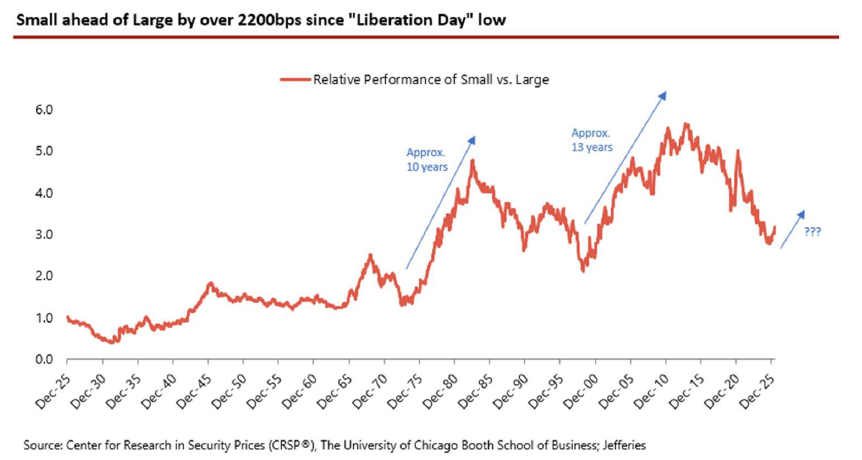
Recent performance may indicate that the cycle is beginning to shift. From June 30, 2025 through June 30, 2026, the Russell 2000 Total Return Index returned 40.78%, compared with 22.33% for the S&P 500 Total Return Index.
Going forward, there are several tailwinds that should benefit US small and mid cap companies vis a vis US large
cap equities:
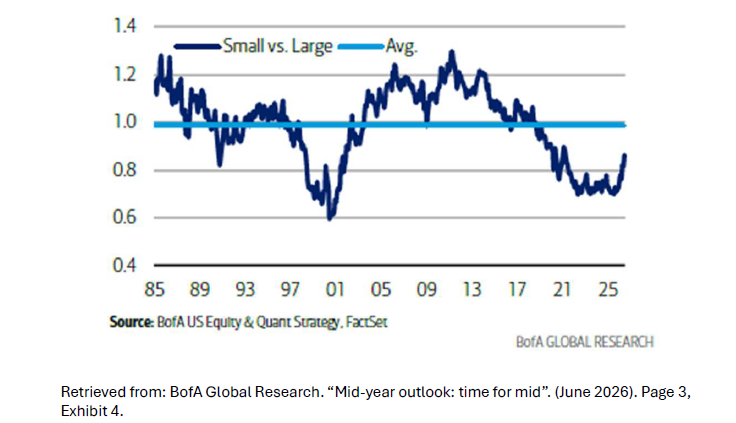
Relative Valuations: Even after their recent outperformance, small- and mid-cap stocks continue to trade at
historically attractive valuation discounts relative to large-cap equities:
Relative Forward P/E of Russell Midcap vs Russell Top 200, 1985-6/22/26
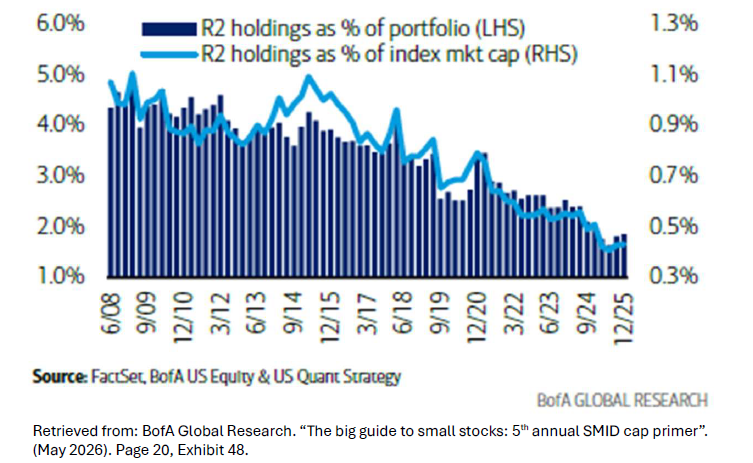
 Relative Weightings: Investor allocations to small- and mid-cap equities remain well below historical averages. To the extent investors rebalance away from increasingly concentrated large-cap positions, small- and mid-cap equities could benefit from meaningful capital inflows.
Value of Russell 2000 stock holdings as a % of total holdings for multi-cap core managers and as a %
of Russell 2000 market cap (2Q08-4Q25)
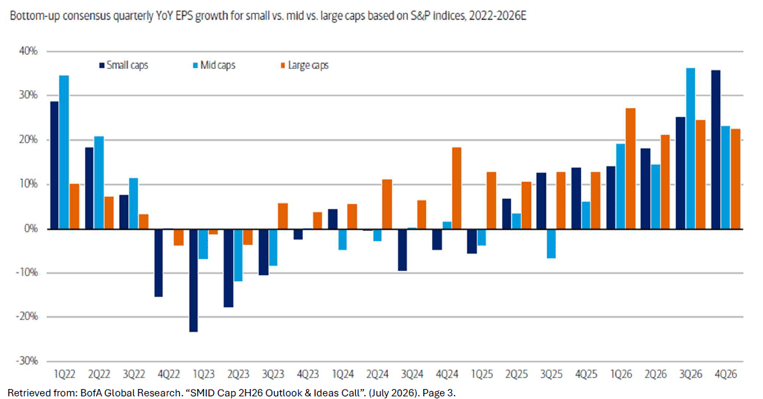
 Earnings Growth: Following a multi-year earnings recession, small- and mid-cap earnings growth has begun to inflect positively and is expected to outpace large-cap earnings growth during the second half of 2026.
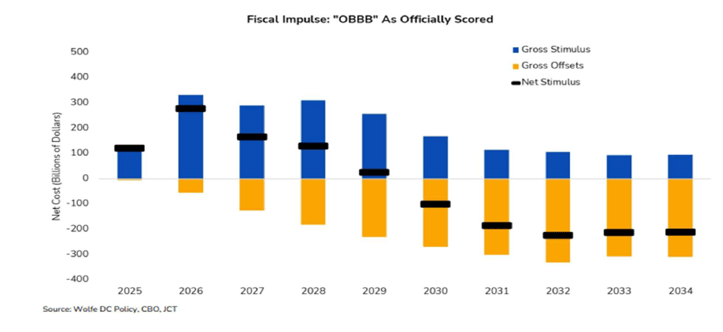
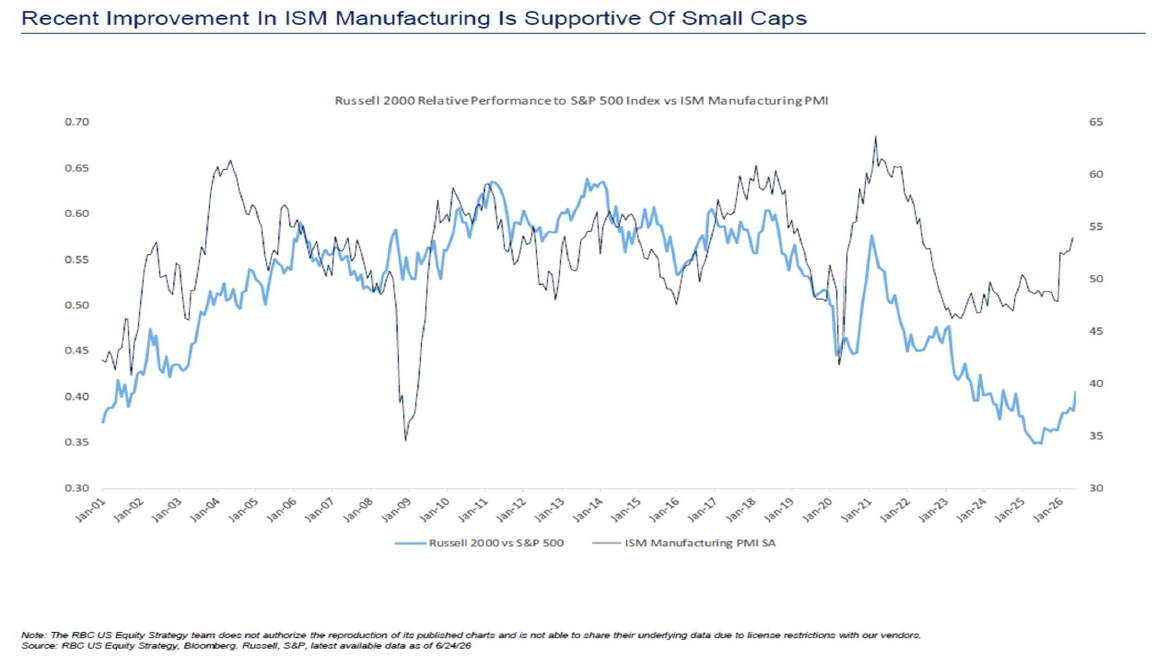
 Re-Industrialization of the US & OBBB stimulus: The re-industrialization of the U.S. economy, combined with
incentives contained within the One Big Beautiful Bill (OBBB), may provide an incremental boost to domestic economic activity. Because small- and mid-cap companies generally derive a larger share of their revenues from the U.S., they may benefit disproportionately from these trends.
 De-regulation: A less burdensome regulatory environment could provide a greater relative benefit to smaller
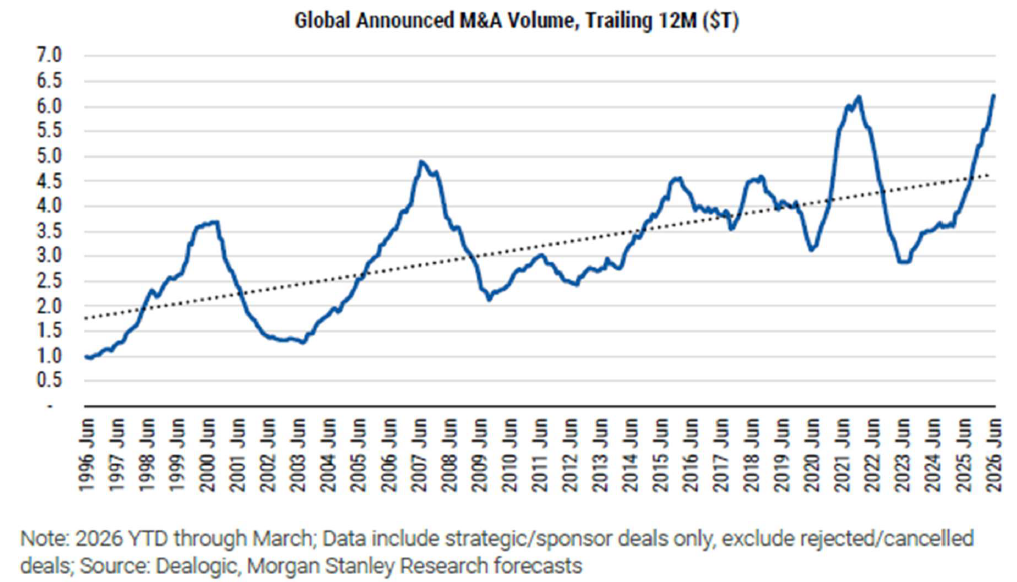
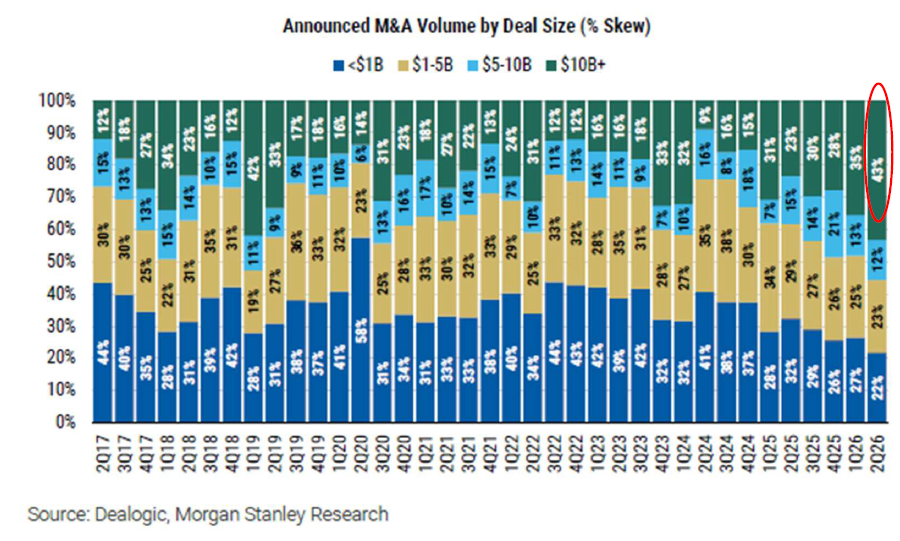
companies, which often face higher compliance costs as a percentage of revenues.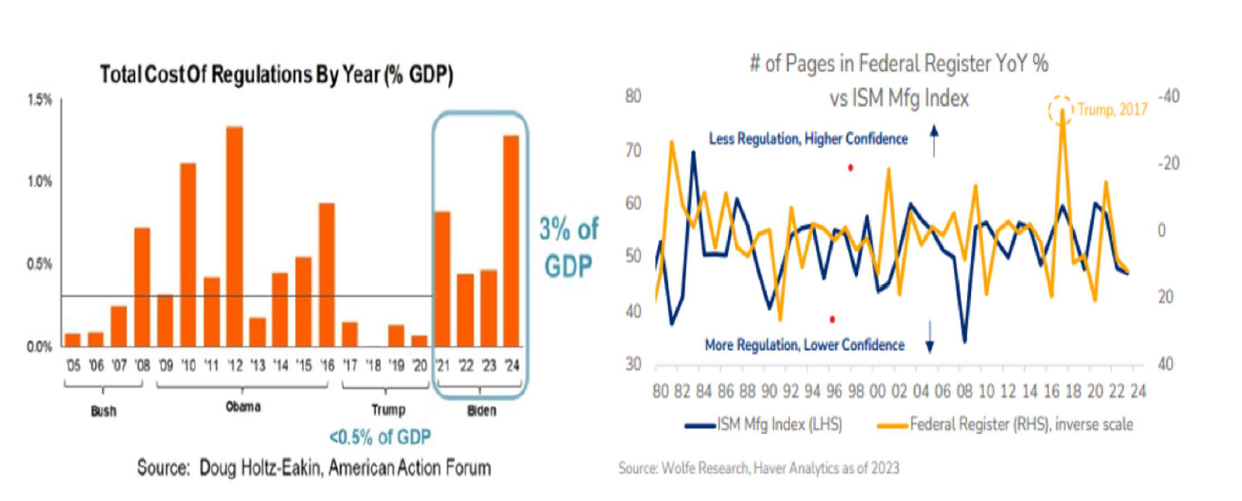 Potential for M&A, from both PE and Strategic buyers. Merger and acquisition activity has recovered but remains
concentrated among larger companies. We believe improving financing conditions and strategic demand could
broaden acquisition activity across the small- and mid-cap universe over time.
 While these macroeconomic and market dynamics create a favorable backdrop for the U.S. Small and Mid cap asset class, we believe the dispersion of outcomes among individual companies remains exceptionally wide. As a result, stock selection continues to be a critical driver of investment returns. We continue to see significant opportunities today to own businesses that are undergoing change and are neglected by the market that have strong balance sheets and cash flow generation, and where we believe we are paying very little for an earnings recovery when it does materialize.
Looking ahead, we believe one of the most compelling opportunities within the U.S. small- and mid-cap universe is the adoption of artificial intelligence to improve productivity, operating efficiency, and profitability:
One argument for investing in the U.S. small- and mid-cap universe to capitalize on AI adoption is to contrast it with investing in today's AI winners. Continuing to invest in AI providers and infrastructure companies effectively represents a relatively concentrated bet that the substantial capital spending programs of a handful of large technology companies will continue to support the current investment cycle. By contrast, investing in AI adopters allows investors to evaluate thousands of companies' efforts to deploy AI and identify the businesses best positioned to improve operating performance and shareholder value. While enthusiasm for the AI data center infrastructure buildout remains widespread, investors have increasingly begun to question some of the financing arrangements and interdependencies emerging among NVIDIA and the hyper-scalers supporting these projects. We believe the next phase of the AI investment cycle is likely to involve a much broader set of participants, with significantly greater dispersion in companyspecific outcomes, creating a larger opportunity set for active stock selection.
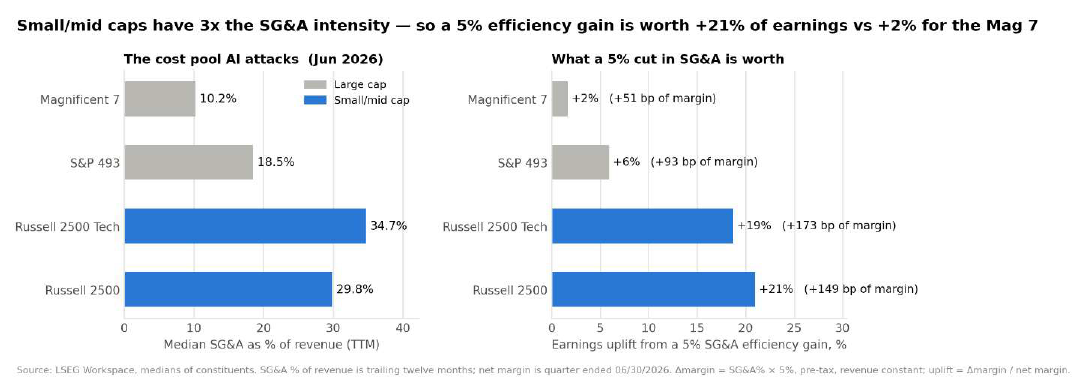
Another argument for investing in U.S. small & mid caps for AI adoption winners is seen by comparing the efficiencies that AI can drive across the market cap spectrum. While larger companies may realize greater absolute dollar savings from AI initiatives, smaller companies may experience greater percentage improvements in profitability due to their higher operating cost structures. The median Russell 2500 company has 29.8% SG&A expenses vs. 10.2% for the median Magnificent 7 company: a 5% reduction in SG&A would drive a larger earnings improvement for small/mid caps:
 Investing in this next part of the AI cycle dovetails nicely with our Change, Neglect, and Valuation philosophy: one of CRM's strengths is our history and focus in the U.S. small- and mid-cap space, where pattern recognition is a critical tool in identifying positive change that remains underappreciated by the market. While the AI wave is clearly a new technological paradigm, we have invested through many previous technology cycles (from the personal computer revolution, to the dawn of the internet, to the proliferation of cloud computing) and have studied the impact these technologies have on future business prospects. Put simply, we have seen repeatedly how new technology affects companies both within and outside of the technology space. At this point in the cycle, our history and experience tell us that investor neglect surrounding the prospects of AI providers has largely faded, while significant neglect and opportunity remain among companies that stand to benefit from AI adoption. While much of the market's attention remains focused on AI providers and infrastructure beneficiaries, we see significant opportunity among the adopters of AI. Accordingly, we have already begun investing in companies that we believe can leverage AI to improve productivity, enhance operations, and create long-term shareholder value. As AI adoption broadens across the economy, we believe the U.S. small- and mid-cap universe oers a particularly fertile hunting ground for identifying underappreciated beneficiaries before their potential is fully appreciated by the market.